Development is complex, so saying no is sometimes better than saying yes
Posted on 11 November 2025
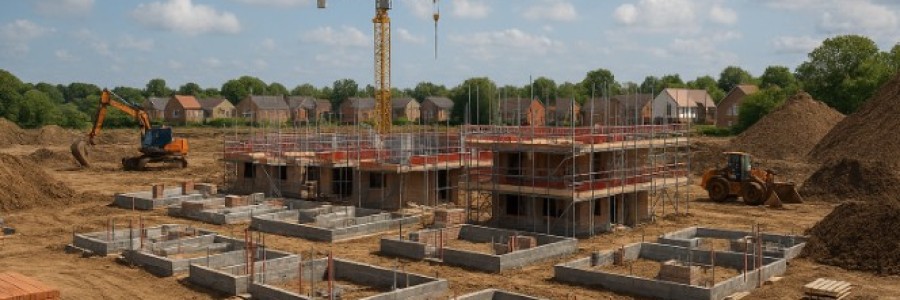
Why land developers shouldn't always do everything that's requested of them - focusing on strategic decision-making in land development is key.
Introduction
In the dynamic world of land development, professionals often receive a multitude of demands from clients, stakeholders,
local authorities, and communities. While the temptation is to try to satisfy every request, the more experienced developers understand the value of a more discerning approach - of actively
looking for ways of not doing everything that is asked of them. This doesn't mean that they are shirking their responsibilities. Instead, they are choosing to make strategic decisions that will lead to
successful, sustainable projects.
The pitfalls of doing everything that is asked of you..
Attempting to meet every demand can lead to a host of
issues in land development. Projects can become too complex and unwieldy, costs can spiral, and
timelines may be extended unnecessarily. Furthermore, constantly saying 'yes'
can dilute the original vision of a development, resulting in a project that
will please no one and undermine profitability and quality.
Strategic focus and resource management
Developers operate with finite resources: time, money, and
personnel. Prioritising essential tasks and questioning the necessity of
each request can help developers to allocate resources efficiently. This will ensure that the most critical elements of a project receive the attention and investment they
require, while the non-essential or redundant tasks are avoided.
Maintaining project vision and quality
Every development begins with a core vision, whether this is sustainable housing, vibrant commercial spaces, or innovative mixed-use
community resources. Succumbing to every external request can dilute this vision, compromising the success of the outcome. Carefully considering which requests to
accept and which to decline will help developers to protect the integrity and quality of
their projects.
Risk management
Not all requests are likely to be beneficial. Some may introduce
unnecessary risks, such as regulatory complications, increased costs, or
technical challenges. Critical evaluation of each request will enable developers to avoid pitfalls that might jeopardise the success of a project, or lead to
unforeseen liabilities.
Encouraging innovation and efficiency
Constantly seeking ways to avoid unnecessary tasks will also help to encourage innovation. Developers are prompted to question traditional
practices, streamline processes, and adopt new technologies or methodologies
that will deliver better results on fewer resources. This mindset fosters a
culture of continuous improvement and competitive advantage.
Building stronger relationships
Ironically, saying 'no' can actually strengthen
relationships with clients and stakeholders. By adopting a straightforward approach, and explaining the rationale behind
declining certain requests—such as cost implications, project vision, or
regulatory constraints—developers can build trust by demonstrating their professional
expertise. Stakeholders will appreciate transparency and the focus on delivering the
best possible outcome.
An example
We recently came across a site where the local council had
declared a climate emergency, and were therefore keen that a new housing development should
comply with their new policy. The local planning authority were seeking to impose planning conditions on the development for building fabric
improvements and low carbon heating with EV chargers for every new dwelling. We explained that these
conditions could be avoided because all new houses must comply with the
Building Regulations (Part L, Conservation of fuel and power and Part S,
Infrastructure for the charging of electric vehicles). Therefore, the inclusion of a condition governing those aspects would have doubled up on the housebuilder's obligations, resulting in unnecessary administration and expense.
Conclusion
Land developers will always benefit from taking a strategic
approach, as opposed to doing everything that is requested of them.
Adopting this philosophy will enable them to manage their resources more effectively, preserve the vision and quality of the project, mitigate risks, encourage innovation, and foster stronger professional relationships. Ultimately, their development will be all the more successful
and sustainable as a result.
Other Articles
Know What a Site is Worth
Estimate the development value of any site in seconds with our Land Appraisal Calculator, used by developers across the UK.
Try the calculator