The chaos 'Butterfly Effect' - How occupying and regenerating empty properties can revive our high streets and communities.
Posted on 04 December 2025
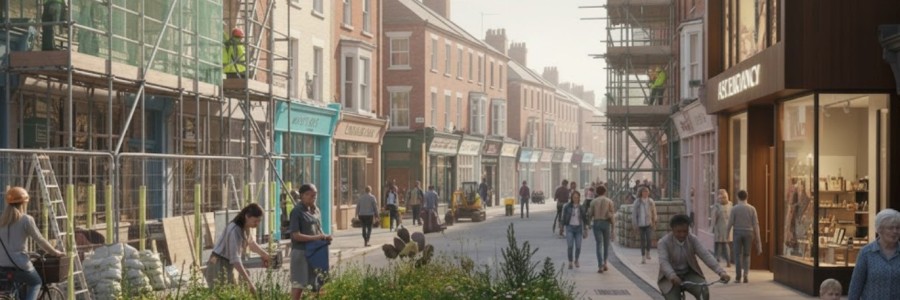
Could the simple act of occupying an empty property spark a chain reaction powerful enough to repair our high streets and strengthen local communities? This intriguing 'Butterfly Effect' of micro-regeneration, is the idea that small, positive interventions can lead to significant, long-term transformation.
Across the UK, thousands of empty homes, shops, and commercial spaces sit unused, slowly falling into disrepair. Yet, by breathing life back into these dormant buildings, the improvements do not just impact the space but can create a ripple effect that transforms entire neighbourhoods.
How small acts can create substantial impact...
It can begin with something small, like a fresh coat of paint or cleaning up an overgrown garden. These visible improvements then create a knock-on effect whereby neighbouring property owners are inspired to improve their living space too. Over time, this results in owners having a greater sense of pride, social inclusion, and shared accountability within the community.
Each small improvement sparks a collective upgrade, reinforcing the overall idea that regeneration does not involve large scale investment from a single household, but is spread across entire towns and cities.
How to tackle crime and antisocial behaviour...
Empty buildings are magnets for vandalism, squatting, and other anti social activities. Converting these derelict structures into homes, community centres, or creative workspaces helps to reduce crime and improve safety.
When people are present, a sense of security follows and well used spaces naturally deter criminal behaviour and make neighbourhoods safer and more welcoming.
The impact of local economies...
Micro-regeneration is also an economic opportunity. Refurbishing vacant properties generates local jobs, from construction and design to retail and hospitality. It increases skill levels within a community and creates space for new businesses to succeed.
Promoting innovation and investment on the local high street and surrounding area will create a more self sustainability and resilient region.
Looking to preserve cultural and historical assets...
Some empty properties hold cultural and historical significance which may be problematic when trying to upgrade a building without compromising its original character. This will thus strengthen community identity as others then associate an area with its historical building.
Ability to address the housing crisis...
With housing shortages continuing to rise, repurposing vacant properties offers a practical and immediate solution. Turning underused spaces into affordable homes relives pressure on housing demand, especially in areas of low affordability.
Environment and sustainability...
Reusing existing buildings instead of demolishing and rebuilding significantly reduces carbon emissions. Retrofitting properties with modern insulation, efficiency heating, and renewable energy systems lowers the environmental footprint and encourages others to complete the same green practices, which creates a multiplier effect for sustainability at neighbourhood level.
Examples of the Butterfly Effect...
There are many examples of the butterfly effect across the UK. One example is Stockport, Manchester. The Stockport Mayoral Development Cooperation (MDR) and associated partners have begun a large-scale regeneration of the town centre.
In particular, the historic Victorian era Weir Mill has been given planning approval and is now under refurbishment by developer Capital and Centric. The plan is to deliver 253 apartments within the restored mill, plus 24000sq ft of commercial space too .
This reuse of an existing building preserves heritage and prevents dereliction by injecting new life into not just the building but the surrounding area.
Using the butterfly effect...
The concept is simple yet powerful. From cleaning up a neglected lot, turning a vacant shop into a café or planting greenery around your property. This is triggering a chain reaction whereby local authorities take notice, investors gain confidence and businesses return.
Over time, what began as a simple act of refurbishment evolves into a cycle of improvement and an overall positive change. This means that in turn, communities become more sustainable, resilient and connected!
Those encouraging change...
Fortunately, there are passionate individuals, organisations and campaigns already leading the way to tackling empty properties, turning decay into opportunity.
A few to highlight are:
- Capital and Centric (Tim Heatley)
- The Empty Homes Network (Adam Cliff)
- Will Hurst
- Dr. Jess Steele, OBE
-Ad Hoc (Andrew Edlington)
These demonstrate that regeneration is very much achievable.
Final Thoughts...
The butterfly effect reminds everyone that transformation does not typically start with a huge, large scale project. It starts with small acts that gather momentum over time creating what is known as this positive multiplier effect. Whether it begins with a repaired roof, reopened shop, or repurposed community this can completely change a spaces character and attract investment to the local area.
The opportunity lies in recognising that every space holds potential value that can be unlocked and used to rebuild communities.
Other Articles
Know What a Site is Worth
Estimate the development value of any site in seconds with our Land Appraisal Calculator, used by developers across the UK.
Try the calculator